French Train Ticket Changes and Refunds: What to Check
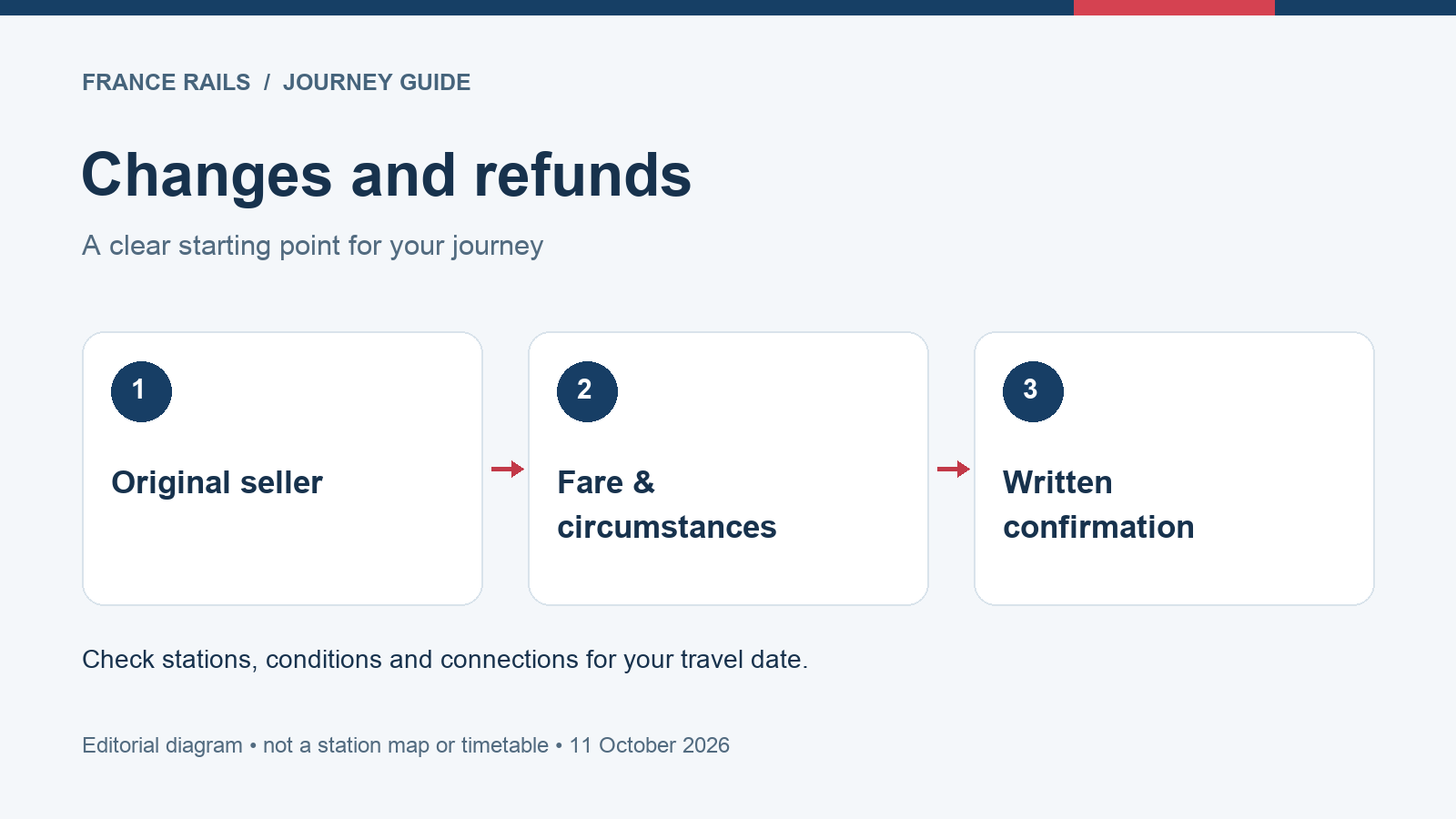
French train ticket changes and refunds depend on the operator, the fare purchased and the circumstances. Start with the conditions attached to the actual booking. A voluntary change of plans and a cancelled train are different cases and should not be assessed using the same rule.
Identify the ticket and original seller
Find the booking reference, operator, travel date, travellers and the seller named in the confirmation. Use the seller’s stated after-sales process or the operator’s specific instructions. A ticket bought from one retailer may not be manageable through another retailer’s account, even when both display the same train.
Read exchange conditions before selecting a replacement
Check the latest permitted time, any exchange fee and the difference between the old and new fare. Exchangeable does not automatically mean free, and an apparently similar replacement can cost more. Review every passenger and segment affected, particularly on a return or group booking, before accepting the final amount.
Separate cancellation from refund eligibility
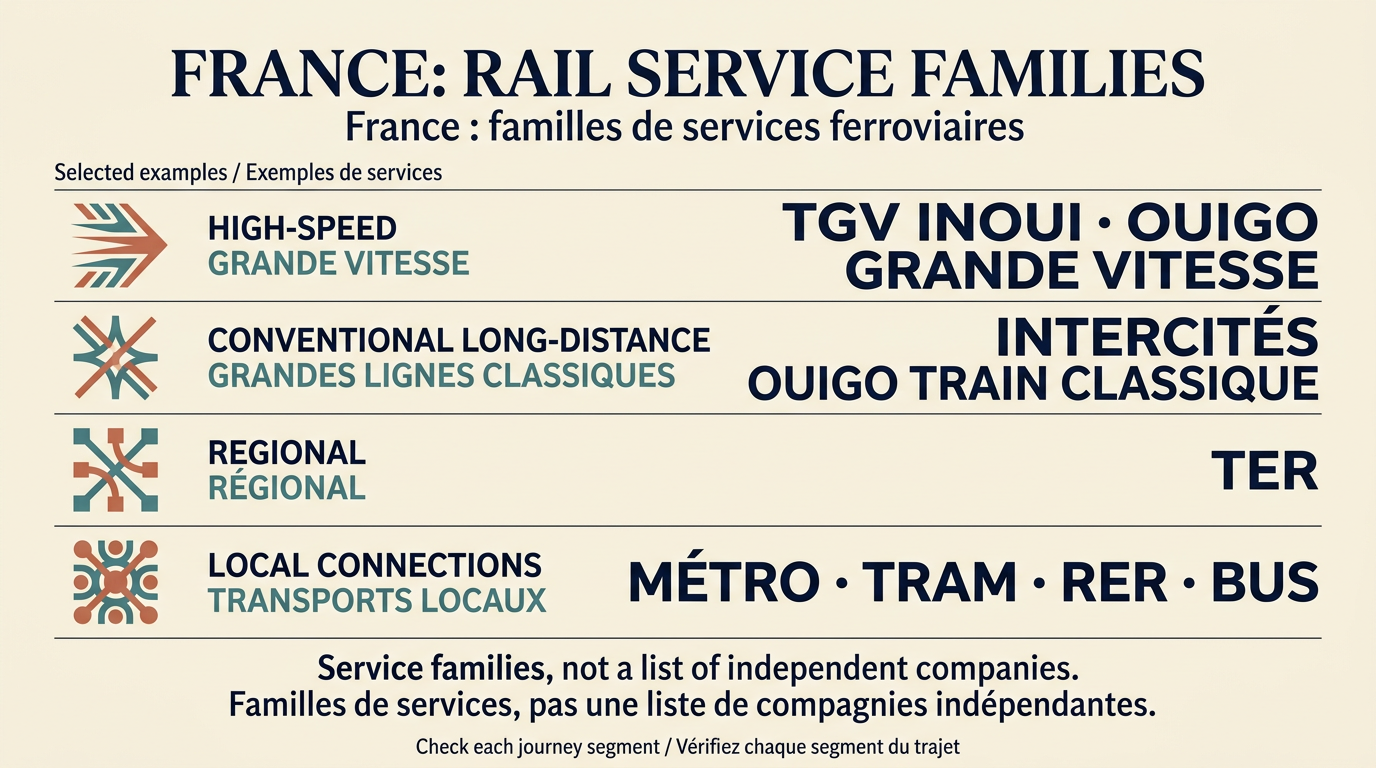
Being able to cancel a journey does not mean every fare is refundable. Check the amount to be returned, deductions, payment method and stated processing time. Low-cost products and regional tickets can have different rules from other long-distance fares. Do not apply one service’s rule to all SNCF-related brands.
Treat disruption as a separate case
If the train is cancelled or delayed, consult the disruption instructions and passenger-rights information for that service. Rerouting, cancellation and delay compensation are different requests. Keep the original ticket and relevant operator notice. Do not buy a replacement assuming it will automatically be reimbursed without checking the applicable procedure.
Verify the result of your request
Before submitting, review which tickets will change or be cancelled. Afterward, save the confirmation and check whether a new ticket was issued, whether extras such as bicycle or pet reservations remain included, and whether any refund is pending. A submitted request is not the same as money received; follow up using the reference and the seller’s stated timeline.
Examples to distinguish before making a request
- Voluntary change: use the original seller’s process and inspect any fee plus the fare difference before confirming.
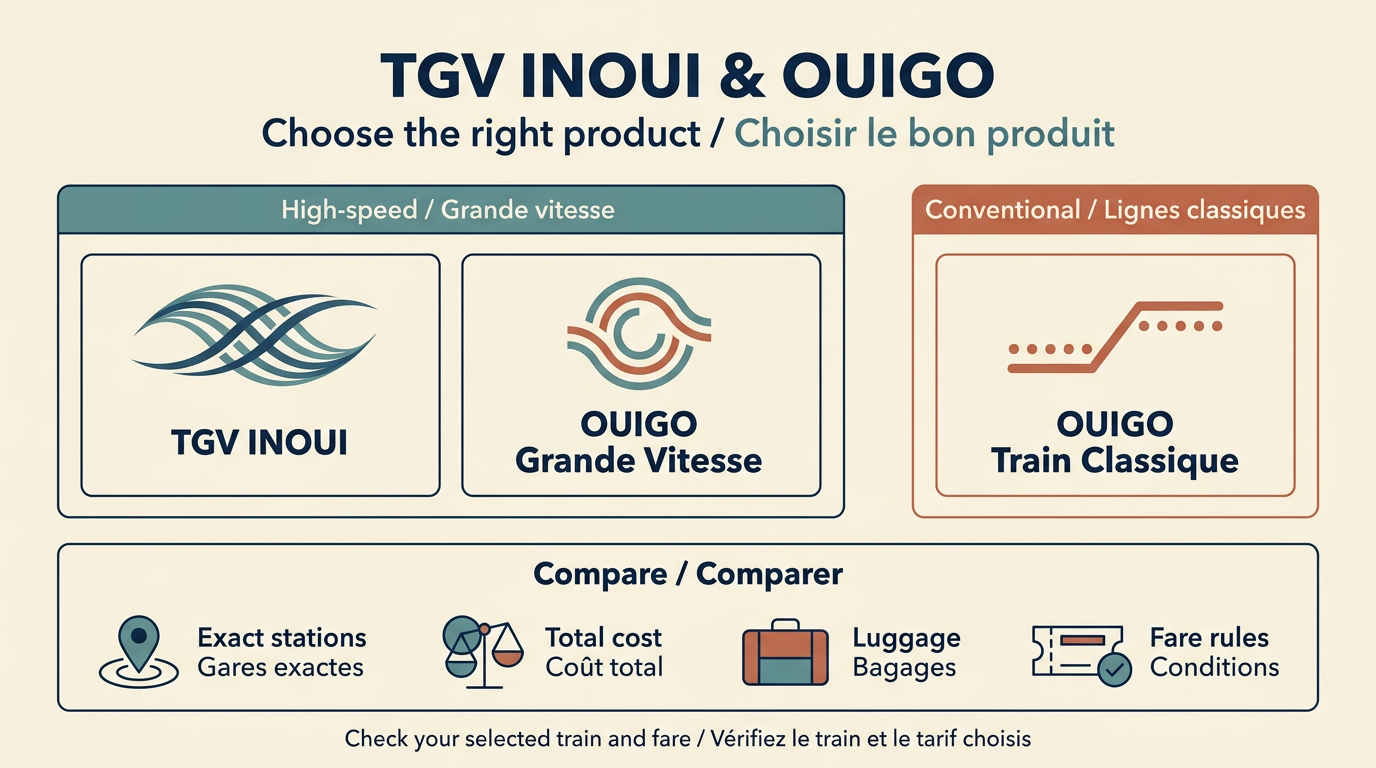
- OUIGO: ordinary voluntary cancellation is not equivalent to a refundable fare. SNCF Connect’s current guidance describes exchanges; disruption arrangements must be checked separately.
- Cancelled or delayed train: consult the operator’s dated disruption notice. Rerouting, repayment of an unused ticket and delay compensation are separate requests.
Keep the booking confirmation, fare conditions, relevant disruption notice and after-sales reference. Never publish your booking reference or personal documents in a public review.
France Rails is an independent journey-planning service. Online booking and ticket issuance are not available here. Verify departures and final fares with your chosen operator or ticket seller.
Continue planning
- Cheap Train Tickets in France: Compare the Total Trip Cost
- High-Speed Trains in France: TGV INOUI and OUIGO Explained
- France Rail Pass Guide: Coverage, Seats and Ticket Comparison
Sources and verification
Editorial check: 11 October 2026. Timetables, fares and conditions can change.